The DNA (web quest) Puzzle

Please watch this YouTube video for instructions on today’s lesson:

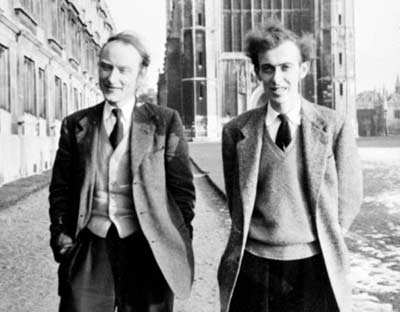
Today we’ll begin our long journey through the wide world of DNA. As we begin to look forward to a fun filled few weeks, its at this point that we look back into the past and discuss the important people who’s contributions and life’s work answered some of life’s biggest questions.

If you are using Puffin: Go to http://www.DNAi.org and click timeline, there you will a see a list of scientists broken up by decade. Use the web quest to determine which scientists to look up. You can read their biographies by clicking their picture. You can also have them tell you their story by clicking the animated icons above them.

If you are not using Puffin: Below are links to videos that are taken from the website DNAi.org (provided you are using a computer with flash or the Puffin App). Use them to complete the introduction to these scientists as a part of this webquest (PDF).

Together the contributions come together to fit like pieces of a puzzle (Read Here) and the shape of the DNA molecule was finally uncovered.


Warm Up Quiz & Fall 2014 Student Feedback

Step 1: Do the warm up Quiz: 

Step 2: Please, please, please help me out and fill out this form. It can only improve our class, my teaching, and your experience!

Unit 3 Post-Test: So what do you know NOW?

Click the link below to prove how much you have learned about Cells…

Unit 3: What do you think you already know

Reminders: Your Biology – Unit 3 Test is tomorrow! It will cover the following topics:

  • Cell Theory
  • Scientists who contributed
  • Types of cells (compare/contrast)
  • Cell Parts
  • Protein creation

Hopefully later today I’ll begin to post the projects you’ve created to YouTube and to this site. Feel free to come back and see what a great job you did.

Friday Sep. 19th

I won’t be in this morning, but I will be back for 5th & 6th period if you need any help. Here is the plan for SEHS & XBio this morning.

Biology

    1. Pick up your worksheet from the table. Do the “Prokaryote Reading” first. Read the passage and highlight any information you think is important.
    2. After racing, answer the questions, label the picture, and color the picture on the backside.
    3. If there is time leftover, you can start your cell part chart which we’ll be going through next week. Below is the YouTube video that will help with your chart.

SEHS

Your IAs are due Monday! Use the example papers to write your papers. Here are a few tips and reminders:

  • Data – Your data collection section will have two parts: Raw Data & Processed Data. The processed Data includes a table with mean, standard deviation, 2 standard deviations, upper range, lower range, and Ttest. It also would include all of your graphs.
  • Conclusion – Is a description of what your processed data says
  • Evaluation – Is a description of what may have influenced your data or not done quite right. For each limitation, write a way to improve it in the future.
  • Bibliography – MLA format
  • Visual Aide – Search “infographic” on google and use an example as a guide. Think of it as a colorful illustration of your data.

I’ll be back to help this afternoon and will be available after school to help. Have a great day & BEAT ST. X!

Enzyme Notes

So as a review, Enzymes are biological catalysts that lower the amount of Activation energy needed to carry out a chemical reaction. They are usually named for the molecule they breakdown or build-up (Lactase → Lactose). If they are placed in solutions with harsh temperatures or pH, they will Denature (change shape) and chemical reactions can no longer take place. For more information, check the infographic below or watch the YouTube Video

Slide15