Honoring a Hero

My Grandfather, Father, and Me (2012)

I’m sorry to say but I will not be with you in class on Monday or Tuesday. I’ll be in Ohio honoring my grandfather who passed away this weekend. He was a great man who defended his country, raised a family, and improved his community. He led a full happy life and he will be forever loved and missed.

Leroy E. Kubuske 1925-2014

So I’m going to leave some directions on what I need you to do for me while I’m gone so we can pick up right where we need to on Wednesday. Theres no handout because I did not have an opportunity to make any copies before i had to leave town. So if you want handouts they are available as pdf’s from the semester 2 documents page. Thanks for your help and understanding.

Front row, 2nd from the Right. In front of his B-17 Bomber “Little Dinah” in 1943

Biology

Over the next Two days please get the following items accomplished. Feel free to do them in any order you wish.

  • Biome Books are Due Tuesday. Feel free to use Monday’s class to work on them.
  • Cycles Notes. I need you to get information on three of the major biogeologic cycles (Carbon, Nitrogen, & Water). I have placed images for each of the cycles on the documents page as well as using the links below. Study the images and take notes on them as needed. When you are ready, answer the three questions below using information you discerned from the images.
    1. (Water) As I got a drink from the drinking fountain at school, my teacher told me I was drinking the same water a dinosaur did 65 million years ago. Is he right or is he just messing with me? and how can I prove this?
    2. (Carbon) What roles do humans play in the Carbon cycle (at least three)?
    3. (Nitrogen) Why is my grass always greener after a thunderstorm… even if it doesn’t rain that much?
  • Cycles Review (pdf). After taking the notes, and either before or after answering the three questions, do this worksheet to check your understanding of the material. The key is posted on the Semester 2 Documents page.

On wednesday we’ll start discussion of Human impacts on the environment so you’ll need to know these cycles so we can discuss how we as humans disrupt them.

Chemistry

Please continue to work on your gas laws unit. You should be somewhere between #7-10 by the end of this week to be on a good pace. Some of you are still lagging behind…

Thank you again for your understanding and I’ll see you Wednesday. – Mr. K

Thursday 4/10

I’ll be out today doing some professional development over at Fatima. If you need me, send a quick email. Otherwise, you are working in an open classroom at your own pace. Please be respectful of the substitute and work on something during class even if it is not something related to our class. Enjoy the great weather and have a good day!

Biology

  1. Biome Books – Due Monday
  2. Interdependence Notes – Must be completed before class tomorrow
  3. Interdependence Guided Practice – Can be done anytime today or tomorrow but not until notes are done
  4. Wolf/Moose Article – On the back of the guided practice (or the first page of the lab pdf)
  5. Predator/Prey Lab – Done in class on Friday. Will take approximately 30-40 minutes to complete. Lab report due Monday but can be turned in Friday

Chemistry

  • Continue working on the open classroom format. As you complete activities, show the sub you have them done (check your own work online) and have him initial your work. Keep in mind it is up to you to control your learning so if you choose to cheat the system and copy work to get extra sections done it will only hurt you in the long run.

Evolution Projects

Check out some of the amazing work our Honors Biology students created to share with some local middle school students to help them learn the basics of Evolution:


Some of the students created twitter accounts for middle schoolers to follow and included key concepts as well as #hashtagvocab


Before we depart…

You on spring break…

I know you are anxious to get out of the building and spend a week away having fun on spring break. Before you go though, I have a couple of questions about how you want to spend the next 3 weeks studying Ecology. Do me a favor and read the questionnaire below and answer the questions fully and honestly. After that, have a great break…

P.S. – We can’t wait to see your evolution projects on April 7th!

What did a T-Rex Taste Like?

trexWhat did a T-Rex Taste Like?

Believe it or not, we actually have was of finding this answer despite the fact the Tyrannosaurus Rex has been extinct for over 65 million years. We can determine a T-Rex features, including taste, using similar features (which we now know are called homologous structures). shared with animals the T-Rex is closely related to.

Recall that yesterday we learned that the more features you have in common, the higher the probability that you share a common ancestor/DNA (the exception would be convergent evolution where two species become increasingly similar despite the fact the originated from different ancestors). So what we can do is plot relatedness, based on characteristics, on a graphic called a cladogram, like the one shown here.

So Today, that’s exactly what we’ll be doing, using the link at the top of this post, you’ll follow the steps to learn how cladograms are created, organized, and what the different branches of it mean. By the time you are through, you will know what it tastes like to bite into a big fat dino-burger!

Evidence of Evolution

Evidence of Evolution PDF

The images below show different types of evidence that prove Natural Selection is the driving force behind evolution. Use these images, information rom your iBook, and the web to create answers to my questions and learn more about the evidence of Natural Selection. For an added challenge, see if you can match the name of the evidence to it’s illustration (Mouse over the images to see the answer):

Analogous Structure, Homologous Structure, Vestigial Structure, Embryology, Amino Acid  (DNA) Sequence, Divergent Evolution, Convergent Evolution, Coevolution, Gradualism, Punctuated Equilibrium, Artificial Selection, Sexual Selection, Founder Effect, Directional Selection, Disruptive Selection, Stabilizing Selection

22_17HomologousForelimbs-L

Why do all of these DIFFERENT animals have the SAME bones?

aasequence_primates

Who do we SHARE the most DNA with? What does this mean about our Evolution?

analogous

Why do these DIFFERENT types of animals have the SAME feature? Does this mean that they are closely related? or does it mean that the trait they share is an advantage in their environment?

artificial

If Humans choose the traits they want plants or animals to have is it still natural selection?

convergent-evolution-marine-all-about-reptiles-com

Why do these DIFFERENT types of animals look so SIMILAR? Does this mean they are closely related? What do Analogous structures have to do with this type of evolution?

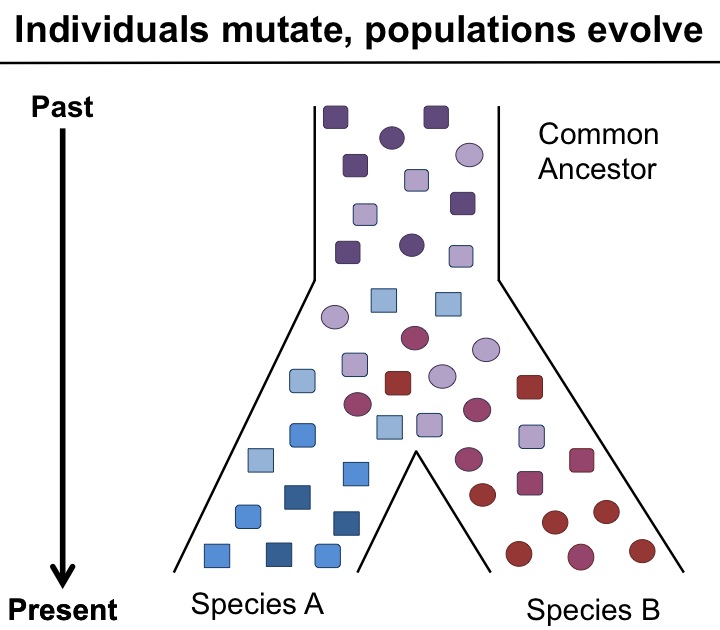
divergent_generic

So there was a large population with many variations… but they separated from one another over time…

divergent

Are these 2 new species of butterflies or still the same? What will happen over millions of years, will they look more similar or more different?

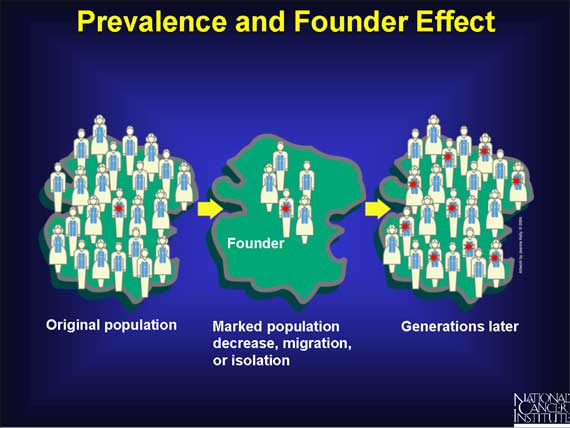
founder

How come only one individual had a red star in the original population, but almost half have one in the new/resulting population?

gene_conservation_med

Why do humans share more DNA with Mice than chickens? What does this tell us about our evolution?

whale-vestigial-structure

Whales have legs??? What does this information tell you about Whale ancestors? where did they live? What has happened to the legs over millions of years and why did this happen? Can you think of any human examples of this?

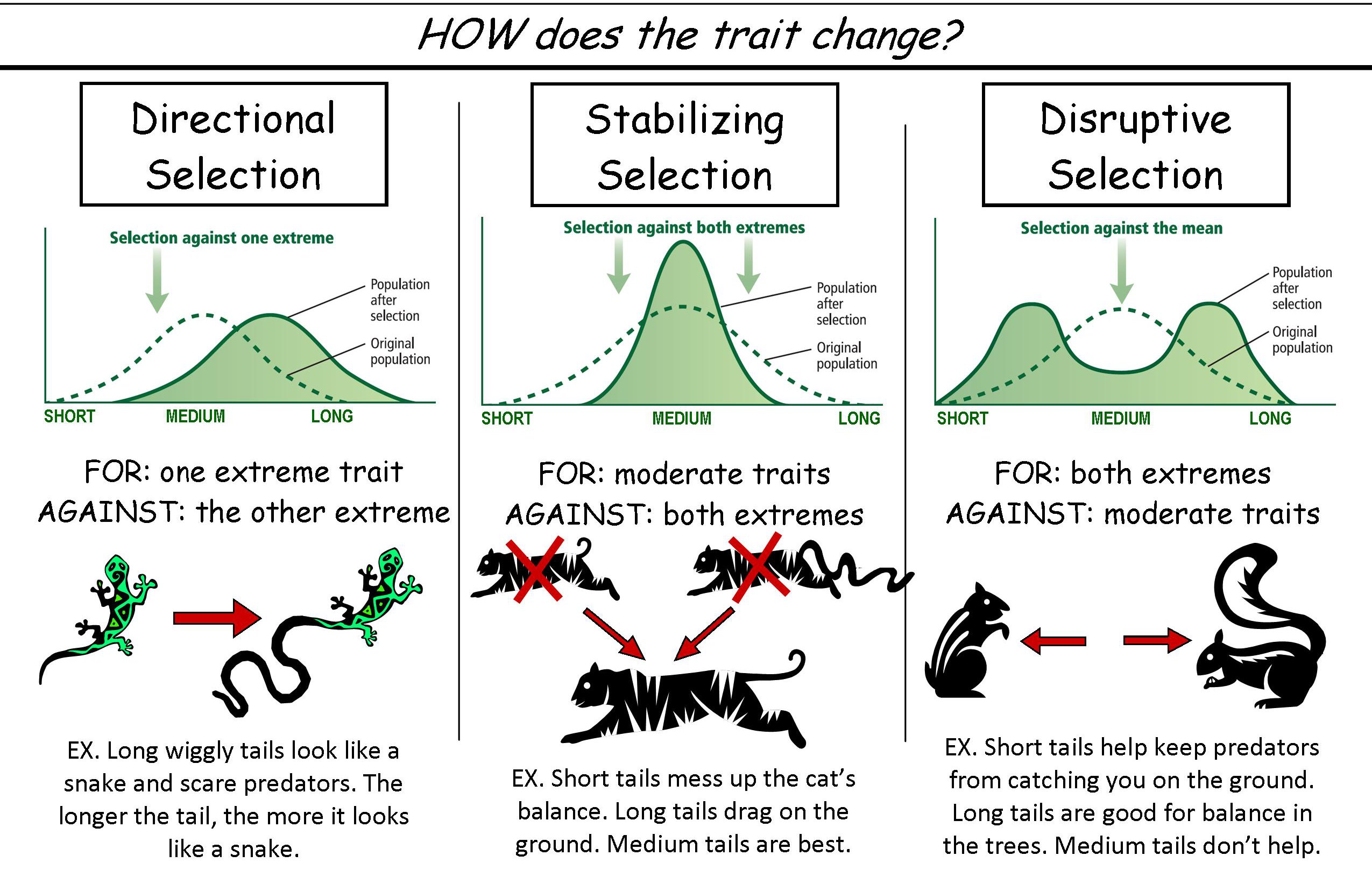
types of selection

Directional means the POPULATION mean will move toward one extreme.
Stabilizing means the POPULATION mean will move more toward the average.
Disruptive means the POPULATION will have two extremes that have large groups and less in the average. What will happen to this population over time?

vertebrate-embryos

Why do human embryos look so similar to fish embryos??? Does this mean we’re related to fish?

peacock_display

does this display help the peacock survive in its environment? or is it just for the ladies?

puncgrad

Compare the two types of evolution… Which one says that catastrophic events cause major changes in the population? How would you describe the other?

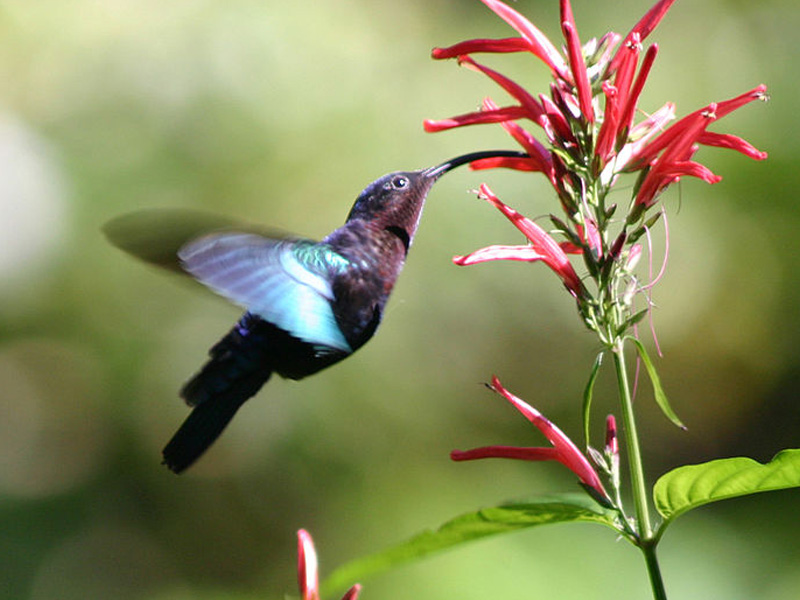
hummingbird

Do you think this plant always had flowers perfectly suited to a hummingbird’s beak?

Theories of Evolution

That’s what we’ve been talking about the last few days. We’ve talked about theories and evidence that supports or refutes those theories. There have been lots of theories of evolution but we’ve focused on two…

  1. Jean-Baptiste Lamarck

    • Acquired Characteristics
    • Whatever traits or habits that you picked up over your life, you passed on to your children.
    • Believed that if you really “needed” something or some habit to survive you could acquire it.

  1. Charles Darwin

    • Descent with Modification – Present living beings are modified decendents of older organisms and species.
    • Modification by Natural Selection – Environment limits the growth of populations. Some Organisms have traits that make them better able to survive in their environment

Evidence suggests that Drawin’s theory, which he illustrated in his book “On the Origin of Species”, is accurate. Can you think of any instances of organisms that look like other species but have some type of special advantages to help them survive in their environment?

To review, click through the Darwin information pages and see if you can help a species of furry creatures live for a million years!

Studying The Fossil Record

Yesterday, we started the process of investigating what fossils can teach us about life on Earth. Below this post is the information from yesterday. Your goal is to use evidence you have found to answer the Big Idea Question today:

How do Fossils show that the Earth, and the Life-Forms on Earth, have changed over long periods of time?

When you have completed that activity, you can take part in the going further activity, A virtual adventure as an archeologist.

Adventures at Dry Creek

As a part of the adventure you will write small entries in a journal. To Access your Journal, use the School Name “Cathedral” when prompted. Your Journal entries will be saved and shared with me so I can monitor your progress. The journal and “special assignment” is worth credit and will apply directly to your Evolution Final Project at the end of the Unit. This is not a required assignment, but rather a chance to go deeper into the content if you are interested in it.

Special Assignment Outline
Data Table & Graph
Scope’s Fauna (Description of Animals)
Eddie’s Hypotheses
Analyzing the Data

The Fossil Record

One of the most enjoyable parts for both myself and my students about studying evolution, is a chance to search for evidence and create your own hypotheses and theories based on your own evidence. Sure the terms and concepts may not be up for debate, but how we use and interpret them is. Today, you and your new table mates will seek to answer a series of questions. Each of these questions will lead you to creating your own theory which you will type in below.

The Guiding Questions can be found by following the link to the Google Doc. Make sure, you follow the directions carefully to make your own version of the Google Doc.

The Fossil Record: Guiding Questions

You will use the iBook and an interactive website from the University of California Berkley to answer the questions.

UCMP: Getting Into the Fossil Record

Finally, when you are done with your guiding questions as a group, you will formulate your own theory and share it with the world. Answer the question below and feel free to view how other interpret the data.

Class Results/ Theories 

Common Assessment #3

Common Assessment #3 – Link

Tomorrow we’ll be taking the 35 Question Common Assessment for the third quarter. It will cover Unit 7 (Reproduction) & Unit 8 (Genetics). The study guide is available on the Semester 2 Documents page, or you can get it from the link below. The key is also available for viewing this afternoon.

Common Assessment #3 Study Guide

Here are the list of key terms we’ve covered during the Second Semester. Click to enlarge:IMG_2449

Below is all of the videos from Unit 7 linked together as a playlist. If you would rather watch one section at a time individually, the links are still available on the Semester 2 documents page or on my YouTube Page

Here are the videos from Unit 8: Genetics